
When Does a Trust Beneficiary Get Their Inheritance?
Home » When Does a Trust Beneficiary Get Their Inheritance?
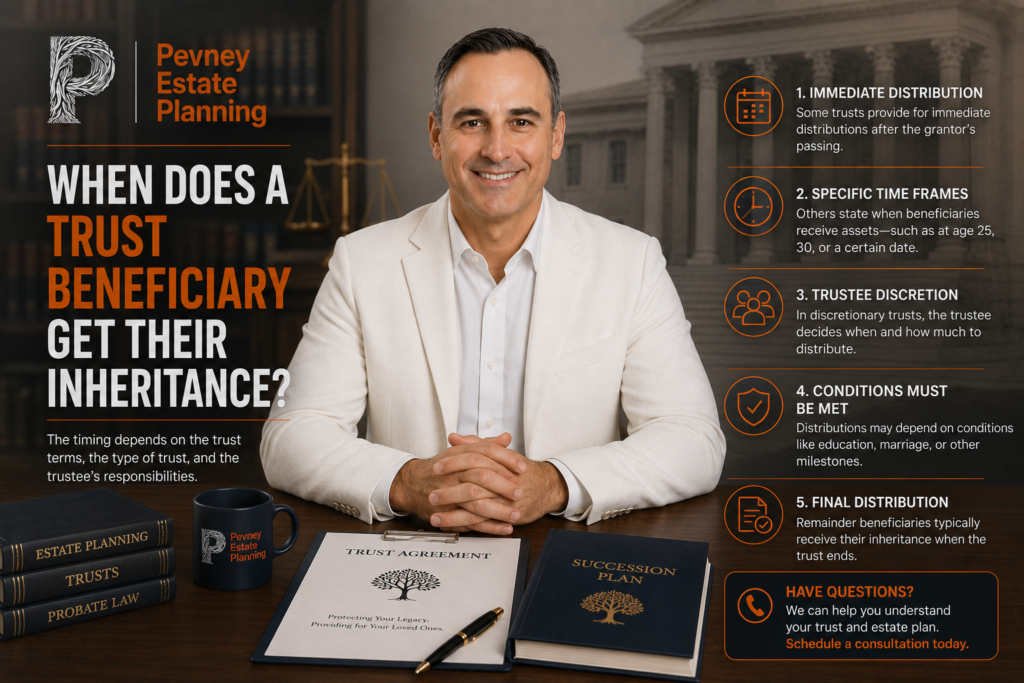
A trust beneficiary receives an inheritance according to the terms of the trust, not simply on the day they ask for it.
Some trusts require immediate distribution after the trust creator dies. Others delay distributions until the beneficiary reaches a certain age, finishes school, avoids certain risks, or meets another condition. A trust may also give the trustee discretion to decide when and how much should be distributed.
Age-based trust distributions are common. A trust might say that a beneficiary receives part of the inheritance at age 25, another part at age 30, and the balance at age 35. Another trust might allow distributions for health, education, maintenance, and support before a beneficiary reaches the final distribution age.
This flexibility is one reason trusts are useful in estate planning. A trust can protect younger adults from receiving too much money too early, while still allowing funds to be used for appropriate needs.
However, once the trust terms require a distribution, the trustee must act. The trustee should not ignore the beneficiary, delay without reason, or impose conditions that the trust does not allow.
A complete California estate plan should explain who receives the inheritance, when they receive it, who manages it, and what happens if a beneficiary is not ready to receive money outright.
How Trust Distributions Work
A trust distribution is a transfer of money or property from the trust to a beneficiary.
The trustee is responsible for making distributions according to the trust document. The trustee does not get to decide based on personal preference, family pressure, or what seems fair outside the terms of the trust.
The trust may direct distributions in several ways.
It may require an outright distribution after the trust creator dies. It may distribute property in stages. It may keep assets in trust for years. It may allow the trustee to make discretionary distributions when the beneficiary needs support. It may require the trustee to consider the beneficiary’s age, health, education, employment, financial maturity, creditor problems, or special needs.
For example, a trust may say:
- One-third at age 25
- One-third at age 30
- The balance at age 35
Another trust may say:
- The trustee may use funds for the beneficiary’s health, education, maintenance, and support until age 25
- The remaining balance must be distributed when the beneficiary reaches age 25
These instructions matter. A beneficiary cannot know their rights without reviewing the actual trust language.
Does the Trustee Have to Pay on the Beneficiary’s Exact Birthday?
Not necessarily.
If a trust says a beneficiary becomes entitled to receive an inheritance at age 25, the trustee may not be required to wire the money on the beneficiary’s exact birthday unless the trust specifically says that.
The trustee may need a reasonable amount of time to calculate the correct amount, review expenses, liquidate assets, prepare receipts, obtain wire instructions, and complete any final administrative steps.
For example, if the beneficiary turns 25 on Monday, the trustee may not be acting improperly merely because the funds are not in the beneficiary’s account that same day.
However, the trustee should not use minor administrative steps as an excuse for unreasonable delay.
If the trust clearly requires distribution at age 25 and there are no valid reasons to delay, the trustee should communicate with the beneficiary and complete the distribution within a reasonable time.
A polite request can often resolve the issue. The beneficiary may ask the trustee:
- Whether the trust requires distribution at the stated age
- What amount is expected to be distributed
- Whether any taxes, expenses, or reserves are being held back
- What information the trustee needs from the beneficiary
- When the distribution is expected to be made
- Whether payment will be made by check, wire, or account transfer
Why Trusts Delay Inheritance Until a Certain Age
Trusts are often designed to prevent young beneficiaries from receiving a large inheritance before they are ready.
A person may be legally an adult at 18, but that does not mean they are prepared to manage a large sum of money, real estate, investments, or life insurance proceeds.
A trust can delay direct control while still allowing the inheritance to be used responsibly.
Age-based distributions may protect beneficiaries from:
- Impulsive spending
- Financial immaturity
- Creditor problems
- Divorce concerns
- Addiction issues
- Poor investment decisions
- Pressure from friends or relatives
- Losing public benefits
- Receiving too much money too early
A trust can also support positive goals. The trustee may be allowed to use money for education, housing, medical care, transportation, business opportunities, or other support before the beneficiary receives full control.
This type of planning is especially important for young families. Parents can use a trust to provide for children without requiring them to receive everything at age 18. The broader planning concerns are discussed in estate planning for young families in California.
What Must a Trustee Do Before Making a Distribution?
A trustee usually has work to complete before distributing trust property.
Depending on the trust and estate, the trustee may need to:
- Review the trust document
- Confirm the beneficiaries
- Identify and secure trust assets
- Value real estate, accounts, or business interests
- Pay valid debts and expenses
- Address taxes
- Prepare an accounting
- Resolve disputes
- Sell property if cash is needed
- Maintain reserves for expenses
- Obtain beneficiary information
- Confirm wiring or mailing instructions
- Document the distribution
A trustee who distributes money too quickly may create problems if later expenses, taxes, or creditor issues arise.
For example, if the trustee gives all funds to beneficiaries before paying property taxes, trust administration expenses, or tax obligations, the trustee may become personally responsible for mistakes.
This is why beneficiaries should expect some administrative process. At the same time, trustees should communicate clearly and avoid unnecessary silence.
The responsibilities of a person managing a trust are explained further in what happens when someone is in charge of a trust.
What If the Trust Says Distribution Is “Upon Request”?
Some trusts state that a beneficiary may receive a distribution after reaching a certain age “upon request.”
This language may require the beneficiary to take an affirmative step. The trustee may not be required to send funds until the beneficiary asks for the distribution and provides the information needed to complete it.
A written request is usually better than a casual phone call or text message.
A beneficiary’s request may include:
- Full legal name
- Current address
- Date of birth
- Contact information
- Confirmation of the requested distribution
- Preferred payment method
- Wire or account information when appropriate
- Request for an expected payment date
- Request for an accounting or calculation if needed
The beneficiary should keep copies of communications.
The tone should usually remain professional. Many trust delays are caused by missing information, tax work, bank procedures, or unclear expectations rather than intentional misconduct.
However, if the trustee refuses to respond, gives inconsistent explanations, or will not provide basic information, the beneficiary may need legal advice.
Can a Trustee Refuse to Distribute the Money?
A trustee can refuse or delay a distribution only when the trust terms or the law allow it.
Valid reasons for delay may include:
- The beneficiary has not yet reached the required age
- The trust gives the trustee discretion
- Taxes or expenses must be paid first
- Trust assets must be sold or valued
- A dispute affects the distribution
- The trustee needs court instructions
- The beneficiary has not provided required information
- The trust requires conditions that have not been satisfied
- A reserve is needed for administration expenses
Invalid reasons may include:
- The trustee personally dislikes the beneficiary
- The trustee wants to control the beneficiary
- The trustee disagrees with the trust creator’s instructions
- The trustee wants to delay because of family conflict
- The trustee is using the funds for personal benefit
- The trustee is refusing to communicate
- The trustee is requiring releases not permitted by law as a condition of a required distribution
California law limits a trustee’s ability to require a beneficiary to relieve the trustee of liability as a condition for making a distribution when the distribution is required by the trust instrument.
That does not mean trustees can never use receipts, acknowledgments, or settlement documents. It means a trustee should not improperly hold required money hostage to force a beneficiary to waive rights.
What Rights Does a Beneficiary Have?
A beneficiary’s rights depend on the trust, the stage of administration, and whether the beneficiary is currently entitled to distributions.
In general, beneficiaries may have rights to information reasonably necessary to protect their interests.
A beneficiary may be able to request:
- A copy of the relevant trust terms
- Information about trust assets
- An accounting
- An explanation of delays
- Confirmation of distributions
- Documentation of expenses
- Court intervention if the trustee breaches duties
Trustees generally have duties to keep beneficiaries informed and to account when required. Certain trust accountings must include detailed information about receipts, disbursements, assets, liabilities, trustee compensation, and other administration activity.
If a trustee refuses to provide basic information, beneficiaries should document their requests and seek legal advice before the problem grows.
What If the Trustee Is Mismanaging the Trust?
A trustee can be held responsible for mismanaging trust property.
Trust mismanagement may include:
- Failing to distribute when required
- Refusing to account
- Using trust money personally
- Favoring one beneficiary without authority
- Selling property for less than fair value
- Ignoring trust instructions
- Mixing trust and personal funds
- Delaying administration without reason
- Taking excessive compensation
- Letting property decline through neglect
A beneficiary may ask the probate court to compel the trustee to act, provide an accounting, stop misconduct, repay losses, reduce compensation, or be removed.
This does not mean every delay is misconduct. Trust administration can take time, especially when real estate, taxes, debts, or disputes are involved.
The question is whether the trustee is acting reasonably, communicating properly, following the trust, and protecting the beneficiaries.
The issue is discussed in more detail in whether a trustee can be personally sued for mismanaging a trust.
Why Clear Trust Drafting Matters
Many beneficiary disputes come from unclear trust language.
A trust should explain:
- When distributions are required
- Whether distributions are mandatory or discretionary
- Whether a beneficiary must request the distribution
- Whether assets may be held in trust beyond a certain age
- Whether the trustee may withhold funds for taxes or expenses
- Whether distributions are made in cash or property
- What happens if a beneficiary dies before receiving their share
- How successor trustees are chosen
- Whether beneficiaries receive accountings
- How disputes should be handled
For example, “distribute at age 25” may create different practical questions than “distribute upon attaining age 25 after payment of expenses and completion of trust administration.”
The more detailed the instruction, the less room there may be for disagreement.
A trust can also provide flexibility. Instead of giving a young adult everything outright at 25, the trust may allow the trustee to use money for appropriate needs while delaying full control until later.
This is one of the reasons families should avoid relying on generic documents. The biggest estate planning mistakes California families make often involve unclear instructions, poor trustee choices, or unfunded trusts.
Choosing the Right Trustee for Age-Based Distributions
A trust that delays distributions requires a trustee who can manage money responsibly and communicate with beneficiaries.
The trustee should be:
- Honest
- Organized
- Financially responsible
- Fair
- Available
- Able to keep records
- Comfortable saying no when the trust requires it
- Willing to distribute when the trust requires it
- Able to work with attorneys, accountants, and financial institutions
A trustee should not use personal opinions to rewrite the trust.
If the trust says the beneficiary receives the balance at age 25, the trustee should not decide to wait until age 30 just because the trustee thinks the beneficiary is immature, unless the trust gives that discretion.
If the trust gives discretion, the trustee should exercise it in good faith and according to the trust’s standards.
Families can review how to choose a trustee or executor before naming someone to manage money for younger beneficiaries.
What Should a Beneficiary Do After Reaching the Distribution Age?
A beneficiary who reaches the age stated in the trust should first review the trust language.
The beneficiary should determine:
- Whether distribution is mandatory
- Whether a written request is required
- Whether only part of the inheritance is due
- Whether the trustee may retain reserves
- Whether an accounting should be provided
- Whether taxes or expenses remain
- Whether the trustee needs identifying information
- Whether the distribution is cash, property, or both
The beneficiary can then send a polite written request to the trustee.
A simple request may say:
“I understand the trust provides for a distribution when I reach age 25. I have now reached that age and would like to request the distribution. Please let me know what information you need from me, the expected amount, and the anticipated timing.”
If the trustee responds and explains reasonable steps, the parties may be able to complete the distribution smoothly.
If the trustee ignores the request, refuses without explanation, or continues delaying after all requirements are satisfied, the beneficiary should speak with a trust attorney.
Can the Trustee Wait Until the Whole Trust Is Ready to Close?
Sometimes the trustee may not distribute every beneficiary’s share at the same time.
A trust may have several beneficiaries with different ages, conditions, or distribution rights. One beneficiary may be entitled to a partial distribution while another beneficiary’s share remains in trust.
The trustee may also need to keep a reserve for taxes, professional fees, property expenses, or disputed matters.
However, the trustee should distinguish between reasonable reserves and unnecessary delay. If a beneficiary is entitled to a distribution, the trustee should not hold the entire amount indefinitely simply because other administrative tasks remain.
In some cases, a partial distribution may be appropriate while the trustee keeps enough money in the trust to finish administration.
The correct approach depends on the trust terms, assets, expenses, and risks.
Key Takeaways
- A trust beneficiary receives money based on the trust terms.
- Some trusts delay distributions until a beneficiary reaches a certain age.
- A trustee usually needs reasonable time to review the trust, value assets, pay expenses, and prepare the distribution.
- A distribution does not always have to occur on the beneficiary’s exact birthday unless the trust clearly requires it.
- A trustee should not delay a required distribution without a valid reason.
- Beneficiaries can request information, accountings, and updates when appropriate.
- Clear trust instructions help reduce conflict between trustees and beneficiaries.
Frequently Asked Questions
Does a trustee have to distribute money on the beneficiary’s birthday?
Not always. If the trust says distribution occurs at a certain age, the trustee may have reasonable time to calculate, prepare, and complete the distribution. The trust language controls.
Can a trust delay inheritance until age 25?
Yes. A trust can delay distributions until a beneficiary reaches a specified age, such as 25, 30, or 35. It may also allow earlier distributions for health, education, maintenance, or support.
Can a trustee refuse to distribute money after the required age?
A trustee should not refuse a required distribution without a valid reason. Valid reasons may include taxes, expenses, unresolved disputes, missing information, or conditions in the trust that have not been satisfied.
What can a beneficiary do if the trustee will not respond?
The beneficiary can make a written request for information, an accounting, and an expected distribution timeline. If the trustee still refuses to respond, the beneficiary may need court assistance.
Can a trustee be sued for delaying a trust distribution?
Yes, when the delay violates the trust or fiduciary duties. Remedies may include compelling distribution, requiring an accounting, reducing compensation, removing the trustee, or recovering losses.
Make Trust Distributions Clear Before Conflict Begins
A trust can protect younger beneficiaries by delaying direct access to an inheritance until they are mature enough to manage it. That protection works best when the trust gives clear instructions and names a trustee who will communicate, keep records, and follow the document.
A beneficiary who reaches the required distribution age should review the trust, make a written request, provide necessary account information, and ask for a reasonable timeline.
A trustee should not delay required distributions without a valid reason. The trustee’s duty is to administer the trust according to its terms, not to rewrite the plan after the trust creator has died.
Schedule your 30 minute strategy session with us or call (949) 377-2996 to make sure your estate plan is set up correctly.
Recent Posts

SECURE YOUR LEGACY
Start Planning for Your Family’s Future Today
With over 18 years of legal experience in Orange County, Michael Pevney focuses on estate planning to help families protect assets, avoid probate, and secure their legacy with confidence.