
How Do You End a Trust in California?
Home » How Do You End a Trust in California?
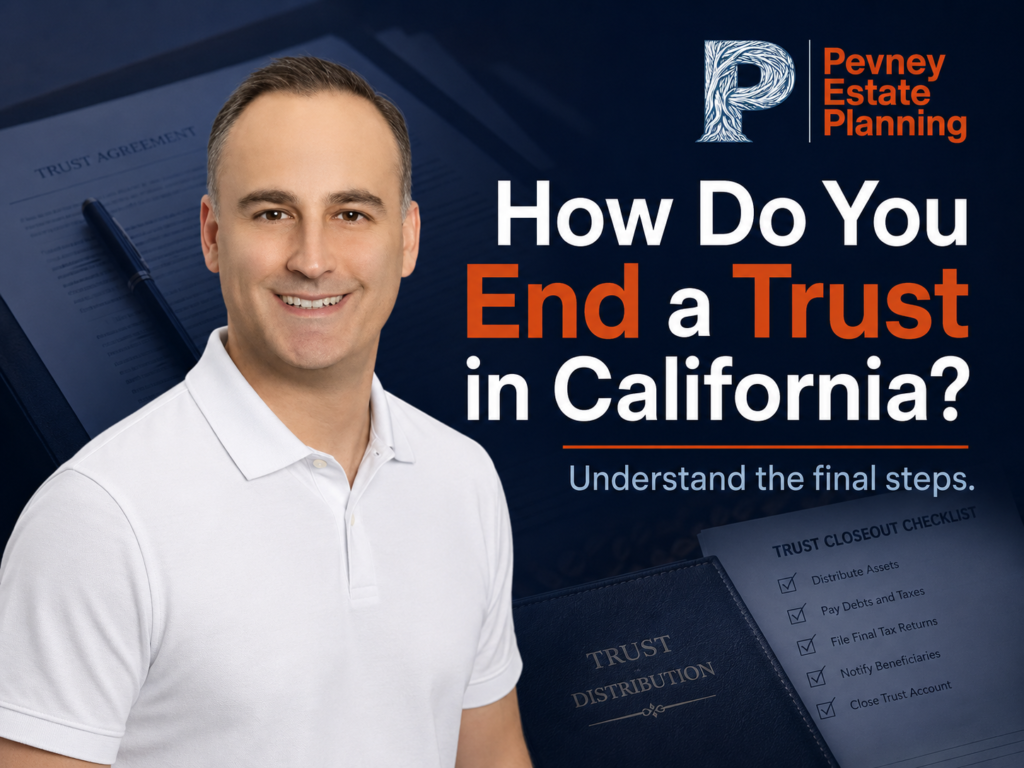
A trust usually ends when its purpose has been completed, its assets have been distributed, and there is nothing left for the trustee to administer.
For many California living trusts, this happens after the trust creator dies, the successor trustee gathers the assets, pays expenses, resolves taxes, and distributes the remaining property to the beneficiaries. Once the trust no longer owns property and no further duties remain, the trust has effectively served its purpose.
However, not every trust ends immediately after death.
Some trusts are designed to continue for years. A trust may hold money for minor children, delay distributions until beneficiaries reach a responsible age, protect a surviving spouse, manage assets for a beneficiary with special needs, or preserve property for future generations.
The trust document controls when and how the trust ends. A trustee cannot simply decide to close the trust because administration feels inconvenient. The trustee must follow the trust terms, California law, and fiduciary duties owed to the beneficiaries.
A complete California estate plan should explain whether the trust ends quickly after death or continues for long-term management.
What Does It Mean to End a Trust?
Ending a trust means the trust administration is complete.
The trustee has finished the work required by the trust, transferred or distributed the trust assets, paid appropriate expenses, and no longer has property to manage.
A trust is a legal arrangement that holds property for beneficiaries. If the trust owns a home, bank account, investment account, business interest, or other asset, the trustee has duties over that property.
Once all trust property has been distributed correctly, the trustee’s active role usually ends.
For example, suppose a parent creates a revocable living trust, transfers their home and financial accounts into it, and names their adult children as equal beneficiaries. After the parent dies, the successor trustee may sell the home, pay expenses, file tax documents, distribute the remaining funds, and close the trust.
At that point, there may be nothing left inside the trust. The trust is no longer doing anything practical.
The trustee may still keep records, but active administration is complete.
A Trust With No Assets Has No Practical Power
A trust is useful because it holds or controls assets.
If nothing is titled in the trust and no property remains inside it, there may be nothing for the trustee to manage.
This is why funding a living trust is so important. Signing a trust document alone does not automatically transfer a home, bank account, or investment account into the trust. Assets usually must be retitled, assigned, deeded, or properly coordinated with beneficiary designations.
If assets are never placed into the trust, the trust may not control those assets after death. Probate may still be required.
The importance of funding real estate is explained in avoiding probate by putting real estate in a living trust.
At the end of administration, the opposite is true. Once everything has been transferred out of the trust according to its terms, the trust may have no remaining practical purpose.
When Does a Living Trust Usually End?
A simple revocable living trust may end after the trust creator dies and the successor trustee completes administration.
The timeline depends on the assets, debts, beneficiaries, taxes, and whether disputes exist.
The trustee may need to:
- Review the trust document
- Confirm authority to act
- Notify beneficiaries
- Identify and secure assets
- Obtain valuations
- Pay valid expenses
- Resolve debts
- File tax returns or coordinate tax work
- Sell or transfer real estate
If the trust owns only simple financial accounts, administration may be completed faster. If the trust owns real estate, business interests, rental property, or disputed assets, it may take longer.
The trustee should not rush final distribution before confirming that expenses, taxes, and liabilities have been addressed.
The duties of a successor trustee are discussed further in what happens if you are in charge of a trust.
Trusts for Young Beneficiaries
A trust can protect younger beneficiaries from receiving too much too soon.
A beneficiary may legally become an adult at 18, but that does not mean they are prepared to manage a large inheritance, investment account, life insurance payout, or real estate.
Instead of giving everything outright at 18, the trust may state that assets remain in trust until the beneficiary reaches a specified age.
For example:
- One-third at age 25
- One-third at age 30
- The balance at age 35
Another trust may give the trustee discretion to use money for school, rent, medical care, transportation, or other support before final distribution.
In this situation, the trust does not end immediately after the parent dies. It continues until the trustee has completed the age-based or condition-based distributions.
This topic is discussed further in when a trust beneficiary gets their inheritance.
Who Decides When the Trust Ends?
The trust document usually controls when the trust ends.
A trustee must read the trust and determine whether the purpose of the trust has been fulfilled.
The trust may say the trustee must distribute all assets after death. It may say the trust continues for a surviving spouse. It may say each beneficiary receives a share at a certain age. It may create separate subtrusts for children. It may require the trustee to hold assets until a condition is met.
The trustee cannot close the trust early just because beneficiaries are impatient. The trustee also cannot keep the trust open unnecessarily if the trust requires distribution.
If the trustee is unsure, the trustee may need legal guidance or court instructions.
Beneficiaries may also have rights if the trustee refuses to distribute assets when the trust requires it. A trustee who delays without proper reason may face objections, accounting disputes, removal, or personal liability.
The issue of trustee liability is discussed in whether a trustee can be personally sued for trust mismanagement.
Does the Trustee Need a Formal Document to End the Trust?
Often, the trustee should document that the trust has been fully administered.
The exact documentation depends on the trust, beneficiaries, and whether court involvement is needed.
Common closing documents may include:
- Final accounting
- Waiver of accounting, if appropriate
- Receipt from beneficiaries
- Release or acknowledgment
- Distribution schedule
- Deeds or transfer documents
- Closing bank statements
- Tax records
- Trustee declaration or closing memorandum
A formal “trust termination” document may be used to show that the trust has completed its purpose and that no assets remain.
However, trustees should be careful with releases. A trustee should not improperly force beneficiaries to waive rights as a condition of receiving a required distribution.
The trustee should get legal advice before preparing final documents, especially if beneficiaries disagree, assets are complex, or questions remain about taxes or expenses.
What If the Trust Still Owns a House?
A trust generally should not be closed while it still owns real estate.
If the trust owns a house, the trustee must determine what the trust says should happen to that property.
The trustee may need to:
- Transfer the house to beneficiaries
- Sell the house
- Rent the house
- Maintain the house for a surviving spouse
- Hold the house until a beneficiary reaches a certain age
- Use the house under specific trust terms
Before transferring or selling real estate, the trustee should confirm authority, title, mortgage status, insurance, property taxes, and beneficiary rights.
If the home has a mortgage, the trustee must also consider who will keep payments current. Inheriting property with debt requires planning, as discussed in what happens if you inherit a home with a mortgage.
The trust does not end until the trustee has properly handled the home.
How Taxes Affect Closing a Trust
A trust may need to remain open until tax issues are resolved.
Tax matters may include:
- Final individual income tax return for the deceased person
- Trust income tax returns
- Estate tax review for larger estates
- Property tax issues
- Capital gains from selling trust property
- Tax forms issued to beneficiaries
- Accounting for income and principal
- Professional tax preparation fees
A trustee should not assume that no tax filing is required.
If the trust sells real estate, receives income, holds investments, or makes distributions to beneficiaries, tax reporting may be needed.
For inherited property, beneficiaries may also need records showing date-of-death value, sale price, and distribution details.
The tax issues involved in selling trust property are discussed in tax ramifications of selling a house in a revocable trust.
Can a Revocable Trust Be Ended During Life?
Yes. A person who created a revocable living trust can usually revoke or amend it during life while they have legal capacity, unless the trust terms say otherwise.
During life, the trust creator may decide to:
- Revoke the trust completely
- Restate the trust
- Amend certain terms
- Transfer assets out of the trust
- Create a new trust
- Change trustees
- Change beneficiaries
- Change distribution instructions
This is different from terminating an irrevocable trust or closing a trust after death.
Once the trust creator dies, a revocable trust often becomes irrevocable. At that point, the successor trustee must follow the trust as written unless a court order, applicable law, or valid modification procedure allows a change.
Trust updates during life are discussed in how hard it is to change a trust in California.
Why Trust Closing Should Not Be Rushed
Beneficiaries may want the trust closed quickly, especially when they expect money.
But rushing can create problems.
A trustee who distributes too early may discover later that money was needed for taxes, creditor claims, property repairs, professional fees, or other expenses. If the beneficiaries already spent the money, the trustee may have difficulty recovering it.
A careful trustee may keep a reasonable reserve until final expenses are known.
However, trustees should not use caution as an excuse for silence or unnecessary delay. Beneficiaries deserve reasonable communication about what remains to be done.
The best approach is balanced: complete the administration carefully, communicate clearly, distribute when appropriate, and document the closing.
Key Takeaways
- A trust usually ends when its assets have been distributed and no duties remain.
- The trustee must follow the trust terms before closing the trust.
- A living trust may end shortly after death or continue for many years.
- Trusts can continue for children, young adults, surviving spouses, special needs beneficiaries, or tax planning.
- The trustee should pay debts, expenses, taxes, and administration costs before final distribution.
- A trust with no assets generally has no practical power.
- Clear records, accountings, receipts, and final documentation help avoid disputes.
Frequently Asked Questions
When does a trust end?
A trust usually ends when its purpose has been fulfilled, its assets have been properly distributed, and no further trustee duties remain.
Can a trust continue after death?
Yes. A trust may continue after death to manage assets for children, a surviving spouse, young adults, special needs beneficiaries, or other long-term purposes.
Can a trustee close a trust whenever they want?
No. The trustee must follow the trust terms and applicable law. The trustee cannot close the trust early or delay closing without a valid reason.
Does a trust with no assets still matter?
A trust with no assets generally has no practical property to control. However, records should still be kept, and the trustee should confirm that all assets were properly handled.
Do beneficiaries need to sign anything when a trust ends?
Often, trustees use receipts, acknowledgments, waivers, or final accounting documents. The appropriate paperwork depends on the trust, assets, and beneficiary circumstances.
Close the Trust the Right Way
A trust ends when the trustee has completed the trust’s purpose, handled the assets, paid appropriate expenses, resolved taxes, and distributed property according to the trust terms.
Some trusts end shortly after death. Others continue for decades to protect children, young adults, surviving spouses, or vulnerable beneficiaries.
The key is not simply whether someone wants the trust to end. The key is what the trust says, what assets remain, and whether the trustee’s duties are complete.
A properly drafted living trust should make the ending process clear so the trustee and beneficiaries understand what needs to happen.
Schedule your 30 minute strategy session with us or call (949) 377-2996 to make sure your estate plan is set up correctly.
Recent Posts

SECURE YOUR LEGACY
Start Planning for Your Family’s Future Today
With over 18 years of legal experience in Orange County, Michael Pevney focuses on estate planning to help families protect assets, avoid probate, and secure their legacy with confidence.